
Lip Filler

Lip filler treatments involve the injection of hyaluronic acid-based fillers to enhance the volume and shape of the kips. This non-surgical procedure can create fuller, plumper lips, improve symmetry and reduce the appearance of fine lines around the mouth. The treatment is tailored to each individual’s desired outcome, ensuring a natural look that compliments their facial features. With minimal downtime, patients can usually return to their daily activities shortly after the procedure. You can minimize the likelihood of bruising by avoiding NSAIDS like ibuprofen before infections.
Frequently Asked Questions
Before Treatment
Before your lip filler procedure, you’ll meet with your healthcare provider. In addition to discussing your desired outcome and motivation for lip filler, your physical health and the shape of your face are important. Your healthcare provider will evaluate your general health, including any preexisting health conditions or risk factors. Talk to your healthcare provider about any allergies you have, too. And tell them about any prescription or over-the-counter (OTC) medications that you’re taking, including herbal supplements.
What to expect during lip filler procedure
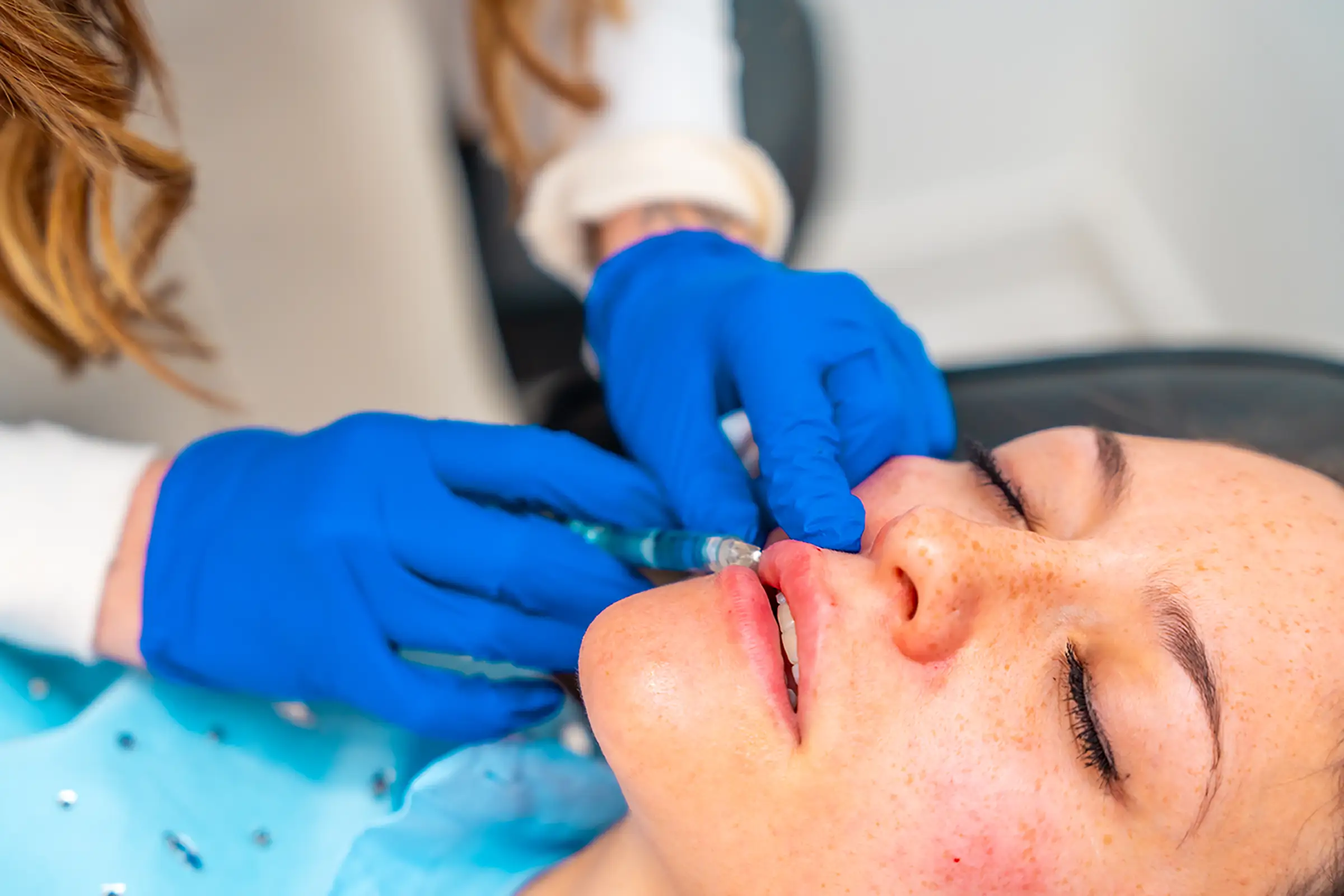
A topical anesthetic will be applied to numb your lips so you won’t feel any pain and the process is as comfortable as possible. The numbing creams often consist of benzocaine, lidocaine and tetracaine (BLT). About 15 to 30 minutes later, your lips should be numb.
Your healthcare provider will then use a thin needle to inject lip filler into any or all parts of your lips, including the edges of your lips (vermillion border), the curve in the center of your upper lip (Cupid’s bow) and your oral commissures (corners of your mouth). You won’t feel any pain, but you may feel a pinching sensation, and your eyes may water. On average, your healthcare provider will insert 1 milliliter (mL) of lip filler into your lips, which is about one-fifth of a teaspoon. The needle won’t go deeper than 2.5 millimeters (mm) into your skin.The entire procedure may take as little as 30 minutes or as long as two hours.
What to expect following lip filler treatment
- Day 1–lots of swelling following appt. Hyaluronic acid filler attracts water bringing more swelling to tissue spaces within the lips. Do not exercise 24-48 hours post filler
- Days 2-4: MORE swelling; you’ll likely be most swollen days 2 and 3 post filler. Lips may even feel firm, lumpy, and mildly tender.
- Days 5-7: lip swelling starts to subside
- 4-6 weeks post treatment: Filler should be settled and lips will be recovered
- Results typically last 6-12 months
Getting lip fillers poses some risks, including:
- Bleeding and pain at the injection sites.
- Cold sore reactivation.
- Discoloration or tenderness.
- Infection.
- Tissue death (vascular compromise), which can occur if lip filler is injected into or around an artery.
- Your lips may be of different sizes (asymmetry).
- The lip filler may bleed into other areas of your face, usually toward the nose (migration).
Advantages of lip fillers:
- There’s a low risk of complications or side effects.
- Hydrated, plump, youthful, natural looking lips
- They’re reversible. If you’re not happy with how you look, your healthcare provider can inject an enzyme (hyaluronidase) to dissolve your lip filler.